

Date
09.2021A Vaccine Against the Trust Crisis
At a time of profound uncertainty—health, economic, and social—society has turned its gaze toward both public authorities and the private sector. Are organisations and their leaders living up to citizens’ expectations? The COVID-19 pandemic, with more than two million deaths and an economic crisis rivaling the Great Depression, has accelerated a global erosion of public trust—affecting media, politics, and business alike.

At a time of profound uncertainty—health, economic, and social—society has turned its gaze toward both public authorities and the private sector. Are organisations and their leaders living up to citizens’ expectations? The COVID-19 pandemic, with more than two million deaths and an economic crisis rivaling the Great Depression, has accelerated a global erosion of public trust—affecting media, politics, and business alike.
When the World Health Organization declared COVID-19 a pandemic, cities across the world came to a standstill. Citizens looked to institutions and companies for answers. Although trust in institutions typically falls during crises, one year later, key questions remain: Have political leaders lived up to citizens’ expectations? Do people trust public administrations to solve their problems? Are the media and business sectors playing an appropriate role in this time of crisis?
According to the latest CIS Barometer (Spain’s Centre for Sociological Research), nearly 26% of Spaniards believe that the main problem lies in politics itself—politicians’ behaviour, political instability, corruption, or the functioning of democracy. In total, over 65% see these as one of the country’s three main issues. Similarly, the CIS Political Confidence Index shows a clear downward trend since the 2008 financial crisis, with all major political leaders rated poorly by the public.
The picture is similar worldwide. A recent IPSOS survey found that public confidence in governments’ ability to manage the pandemic effectively has declined in most countries over the past year. Paradoxically, those elected to manage crises and public services are now among the least trusted—an urgent signal that institutions must rebuild confidence through transparency and accountability.
According to the Edelman Trust Barometer, this trust crisis is most pronounced in governments and politics (53%), but also affects the media (51%), NGOs (57%), and even the corporate sector (61%)—which, despite everything, now ranks as the most trusted institution. The study highlights how the swift response of businesses—from vaccine development to rapid adoption of remote work—has improved their credibility and positioning. Today, people trust private companies more than governments to drive positive change.
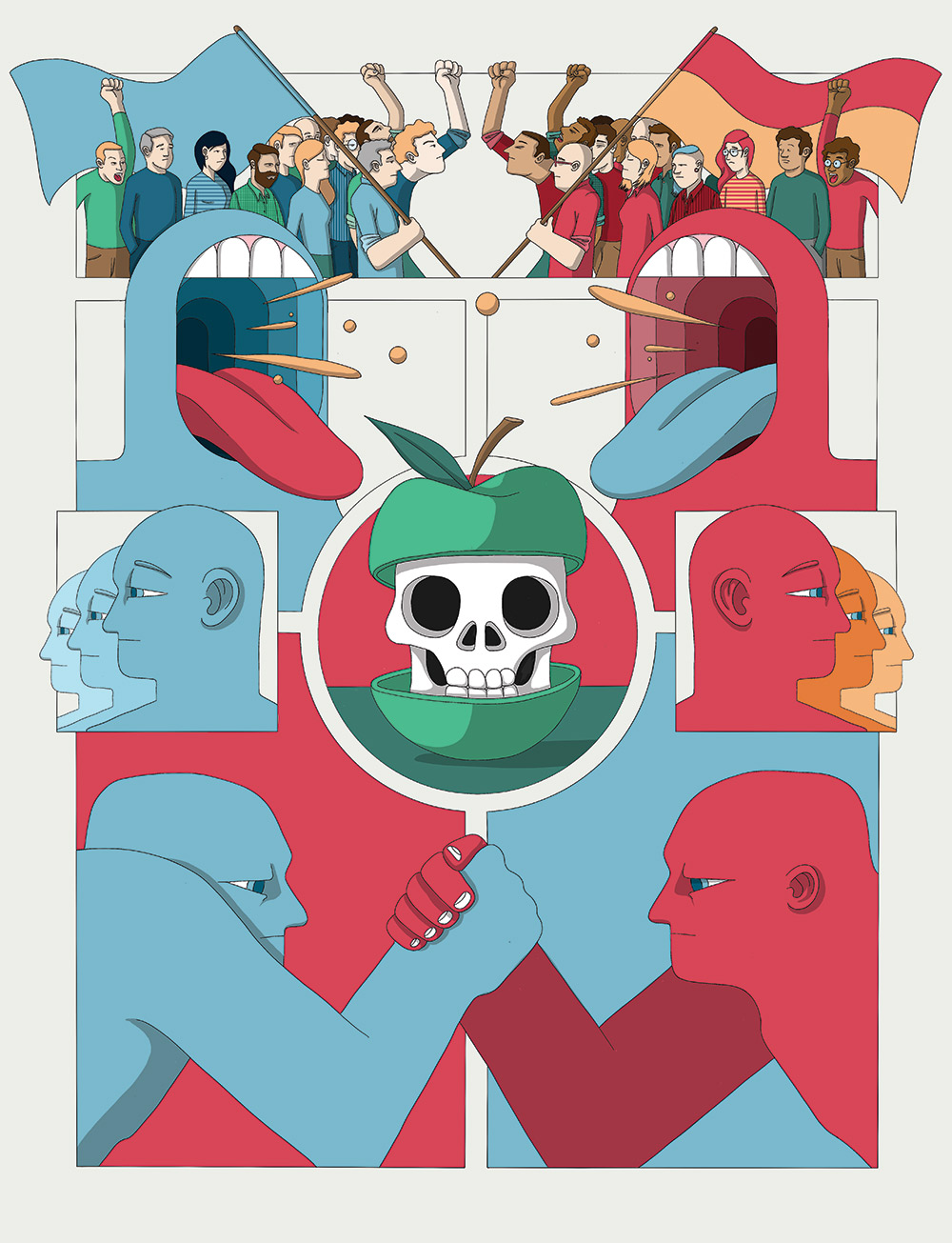
Public disaffection with politics and institutions, the spread of misinformation and “fake news,” rising polarisation, and activism against poor corporate practices have all deepened a crisis of trust dating back to the 2008 recession—now worsened by the pandemic. Back then, movements like Spain’s 15M emerged. Could COVID-19 and its socio-economic fallout trigger a new wave of civic mobilisation? And how can lost trust be restored?
Trust, essential for any functioning society, rests on two pillars: competence (delivering on promises) and ethical behaviour (acting in the public interest). Citizens now demand credible leadership, broad consensus, and effective solutions. Within this context, new trends are emerging to help bridge the gap between citizens, companies, and institutions.
Open Democracy
Over the past year, many citizens—disillusioned with the slow or inadequate response from governments and businesses—have organised independently. Acts of neighbourhood solidarity during the pandemic or after Storm Filomena are clear examples. Citizen-driven initiatives like Equipo País, a collaborative platform of 130 entrepreneurs, academics, and business leaders working on strategic proposals for national recovery, or Talento para el Futuro, which empowers young people to become agents of change through an intergenerational pact towards 2030, illustrate this shift.
Movements such as 15M or Fridays for Future show that citizens are more informed, mobilised, and unwilling to settle for a democracy limited to voting every four years. They want to participate actively in shaping public policy. Opening new spaces for dialogue—where governments, companies, and civil society can collaborate—will be key to building a more transparent, participatory, and high-quality democracy.
Rethinking Capitalism
The democratisation of information and the rise of hyper-transparency have intensified public scrutiny of corporations, increasing their reputational risks. In response, the traditional shareholder-focused model is evolving into a stakeholder capitalism that balances profit with purpose. From the Business Roundtable to the 2020 Davos Manifesto, hundreds of companies have committed to creating shared and sustainable value.
A McKinsey report notes that multinational corporations have unprecedented power to drive social change. In a global crisis like today’s, expectations for responsible corporate leadership are higher than ever. Examples of corporate activism include Amazon’s offer to the Biden administration to use its logistics network and technology for vaccine distribution; Telefónica’s “Manifesto for a New Digital Deal”, advocating a people-centred digitalisation; and Google’s Think FuTourism, a platform connecting experts to develop innovative solutions for the tourism sector.
This demand for responsibility extends to CEOs themselves. According to the Edelman Trust Barometer, eight in ten respondents expect CEOs to speak out on major social issues, and more than two-thirds believe they should act if governments fail to do so. Beyond ethical conduct and transparency, top executives are now expected to serve as agents of change—so-called “activist CEOs.”
From Pandemic to Infodemic
We now face an unprecedented disinformation crisis. Citizens receive more information than ever, yet trust in news sources has plummeted. Edelman reports that 59% of respondents believe politicians, business leaders, and journalists intentionally spread falsehoods or exaggerations. With no trusted reference point, society struggles to discern reliable information. All media channels are at historic lows in credibility—social media (35%) being the least trusted—while confidence in traditional media has dropped eight points, to 53%.
In today’s environment of instant, multi-channel, and unfiltered information, media outlets, digital platforms, and institutions must embrace greater transparency to rebuild trust. Governments must overcome their fear of openness, providing accessible, objective, and continuous information. For their part, tech platforms should strengthen partnerships with fact-checking organisations (such as Facebook’s collaboration with Newtral and Maldita.es in Spain) while developing technological solutions to help users distinguish professional journalism from clickbait and misinformation.
In Summary
The erosion of trust across governments, media, and institutions threatens democratic cohesion. Yet within this crisis lies an opportunity: to build a more open democracy, a more responsible capitalism, and a more transparent information ecosystem. Trust, once lost, takes time to rebuild—but it remains the most powerful vaccine against collective uncertainty.