

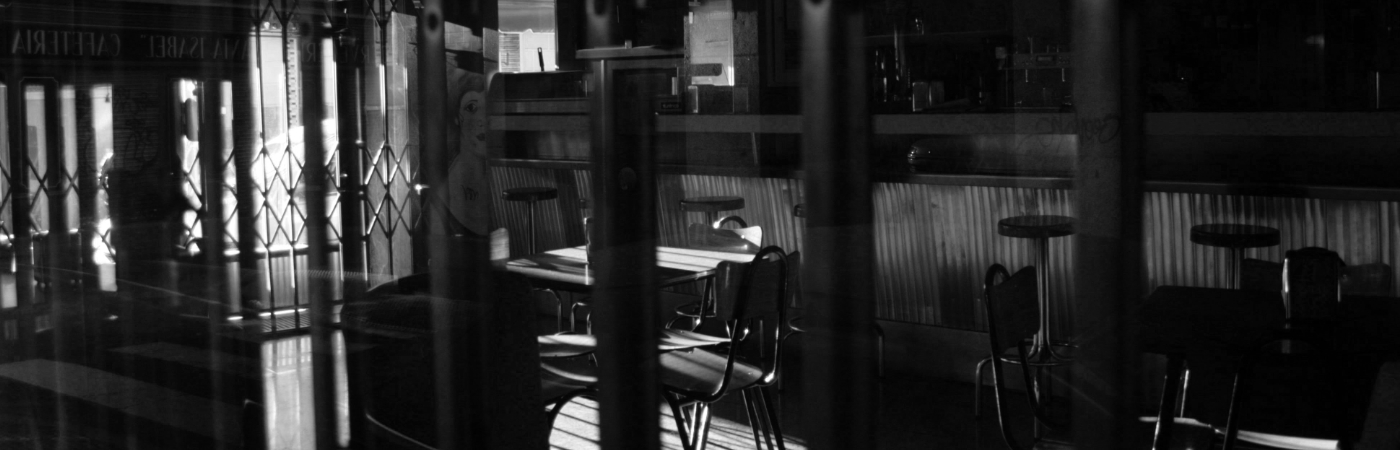
Seated on the terrace of a café in Madrid’s Plaza de Santa Cruz, an elderly woman orders two coffees. It’s Saturday afternoon, and sunlight filters through the narrow streets of the Cortes district. The waiter shouts toward the bar, “One coffee for Manuela, and another for her sister!” He steps back outside, greeting a couple of passers-by in near-perfect Spanish. Perhaps they’re workers from nearby cafés, ending their morning shifts and heading home—maybe toward the southern neighbourhoods, where the city still breathes at a different pace.
It’s surprising to witness this kind of exchange in the Madrid of the Austrias, just a street away from the Plaza Mayor. Alongside this scene, I notice a couple with suitcases, a family speaking German, and a group who seem to be pausing between an Instagram-famous brunch and a free walking tour. Each scene layers over the next, forming a sort of urban palimpsest—a city written and rewritten by overlapping lives: residents, tourists, and workers crossing paths, revealing different ways of inhabiting the same space.
This blend of moments also shows how tourism reshapes the way we look. Some gazes are born of habit and familiarity; others follow a choreography repeated endlessly. As Ana Pacheco explains in Estuve aquí y me acordé de nosotros, in tourist spaces we tend to look at what others have already looked at. Perception becomes standardised: we seek to take the same photo of the Schweppes sign and relive experiences already validated by others. The city becomes diluted—packaged into consumable experiences that extract value from the local, hollowing it out and replacing meaning with immediacy, appearance, and consumption.
The contrast between temporalities becomes clear. On one side, Manuela and her sister evoke a slower world where time stretches and relationships form beyond haste. Yet they coexist with those who rush through the city, transforming it into what Marc Augé called a non-place—a space without memory. This echoes Baudelaire’s modernity, a city experienced as spectacle rather than as an entanglement of everyday lives. A liquid city, as Bauman would say, where everything changes and dissolves as fast as it is consumed. Perhaps that’s why Blas de Otero called Madrid his stepmother—the city feels that way to those who arrive from other provinces seeking stability and dignity, only to face sky-high rents, precarious work, and declining quality of life each time they step into Line 10 of the metro.
If this new wave of tourism turns Madrid into a non-place stripped of connection, what’s missing is precisely what Simone Weil called “the rarest and purest form of generosity”: attention. Not the fleeting glance of a tourist, but the kind that implies care—recognising others in their everyday existence. To stop and notice Manuela and her sister is to see that there are still neighbours sustaining life in a space designed to be exploited and consumed. A place where low wages, high rents, and precariousness seep into daily life. This is why attention and care become acts of resistance—ways of weaving community against the isolation and indifference that dominate urban living.
In the midst of a culture of immediacy, to stop and truly look becomes a political gesture. Against false promises of progress, attention restores weight to the everyday. Caring for a cultural centre, a public square, or a neighbourhood relationship becomes a quiet form of defiance—a statement that the city does not exist solely to be consumed.
Perhaps the future of Madrid—and of so many other cities—depends on this capacity for attention: on recognising what still pulses in unheard voices and unseen ties. Because wherever someone tends and listens, there still exists the possibility of community, belonging, and meaning.
By Raquel Alonso Teuler